Economy U8
AI-Built Creative Suite Clones Test Adobe’s Subscription Model
A developer says AI helped build free alternatives to 13 commercial apps. Their early limitations leave questions about how far the challenge to paid software can go.
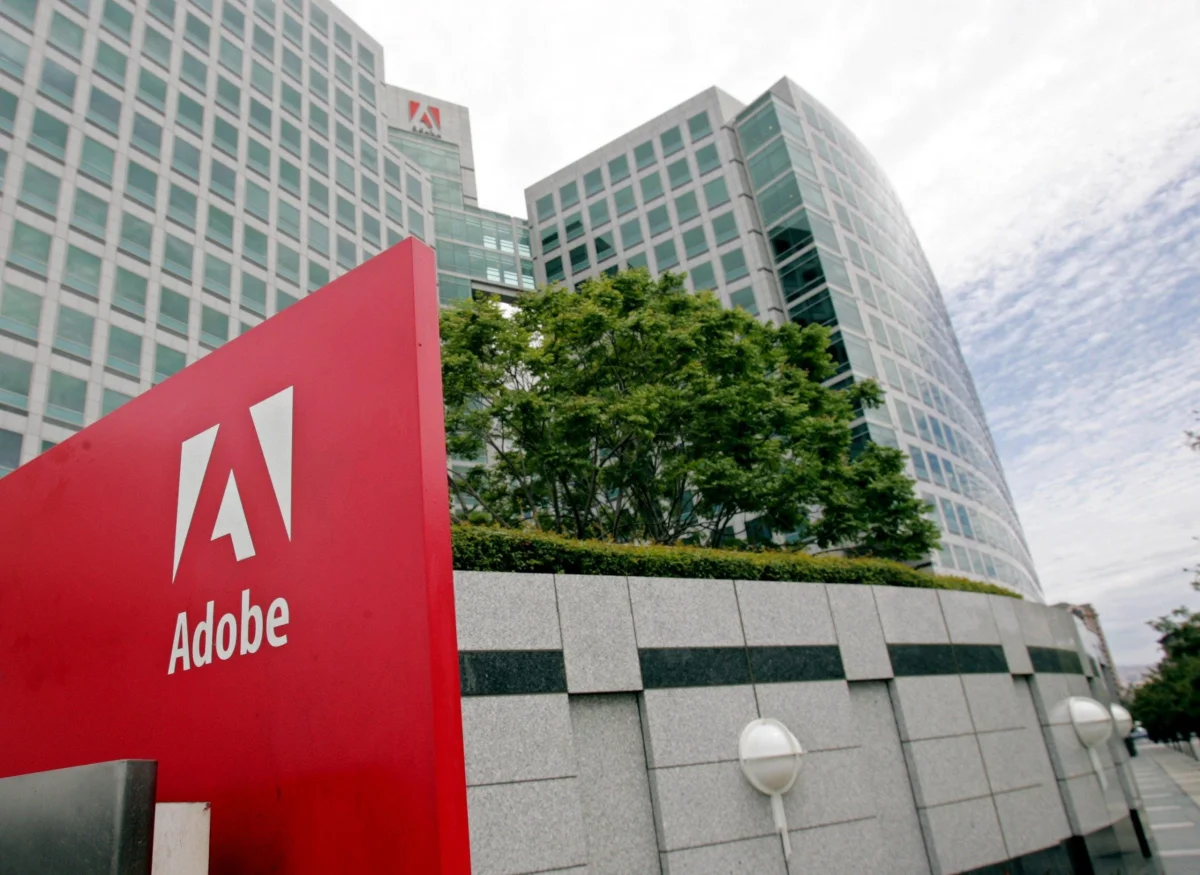
Adobe’s subscription model faces a new kind of challenge: a developer says AI helped him build free software that recreates the interfaces and tools of several Creative Cloud products. The apps are early and incomplete, so they don’t yet match Adobe’s software in practice. But the project puts a sharper question on the table: how quickly can AI lower the cost of creating alternatives to products that customers have to keep renting?
That question matters beyond Adobe. A growing number of software firms rely on recurring payments rather than one-time purchases. If AI-assisted development makes it easier to produce usable substitutes, those companies may face more pressure to justify recurring fees through features, support, updates and compatibility.
The cost of renting creative software
Adobe Photoshop costs $22.99 per month on its own, or $19.99 per month as part of the Photography plan, which includes Lightroom and 1 TB of cloud storage. The Creative Cloud plan costs $70 per month before discounts. These prices illustrate the recurring commitment behind tools that many users depend on for everyday work.
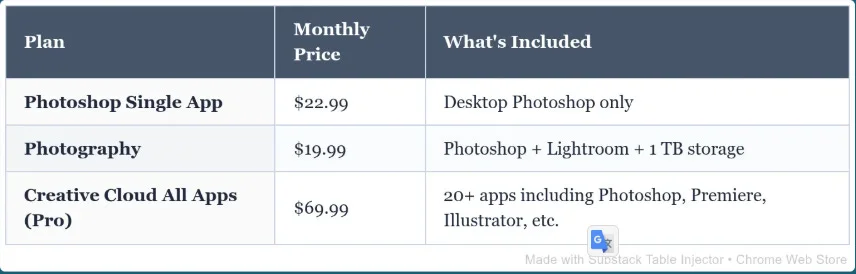
Adobe Photoshop 2026 pricing options
The source article says the last Photoshop version customers could buy outright was released in 2012. For Acrobat, the last perpetual version arrived in 2020, and its end of life was last year. Adobe’s shift to subscriptions sits within a wider software industry change: customers increasingly pay for ongoing access instead of owning a version they can continue to use indefinitely.
That arrangement gives software makers recurring revenue and a direct channel for delivering updates. For users, it can mean paying for as long as access remains necessary. The trade-off is especially visible when a product becomes part of a professional workflow: replacing it can require learning a new tool, moving files and adapting established processes.
AI lowers the cost of building alternatives
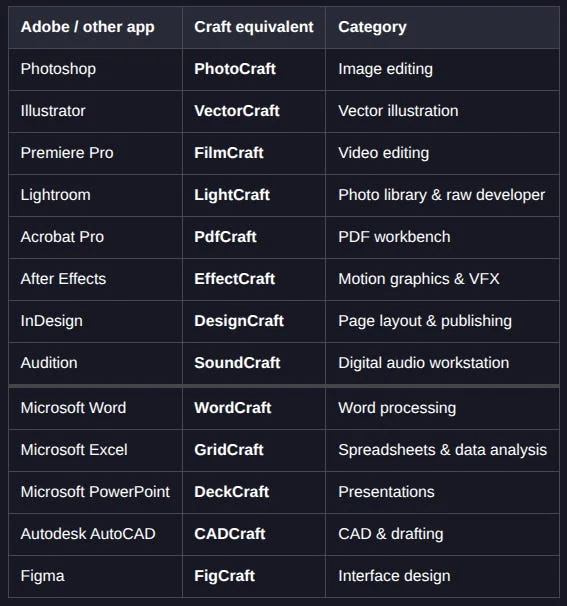
Brandon Thomas, a software developer, says he used Anthropic’s Claude Opus 5.5 to build clean-room alternatives to Adobe applications. The work reportedly began on September 30, with a first release arriving one week later. The project, called Crafting Apps, now lists 13 products: eight from Adobe, three from Microsoft, and one each from Autodesk and Figma.
The apps recreate the look and tools of products including Photoshop, Illustrator, Premiere, Lightroom, After Effects, InDesign and Acrobat Pro. They’re written in Rust, with WebAssembly versions that can run in a browser. Thomas’s project presents them as open-source alternatives; the account describes the software as newly released and still at a very early alpha stage.

In reporting on the project, Ars Technica noted that free and open-source tools already cover some of the same needs. The newer effort aims to reproduce Adobe’s interface and functionality more closely. That ambition remains a work in progress: users have pointed out shortcomings, and the article’s source describes the apps as far from finished.
Thomas initially said he expected to reach 100% feature parity within a month. Days later, he said 99% parity would take months rather than years. Those are targets, not demonstrated results. Matching a familiar interface is only one part of replacing established software; reliability, file compatibility, performance and support also shape whether people can use an alternative for paid work.
What the project does and doesn’t establish
The strongest claim in the source is that AI could make it possible to recreate proprietary software and distribute substitutes at no charge. The Crafting Apps project offers an early example of that approach, but it does not establish that every commercial program can be cloned successfully, or that a free app can immediately replace a mature product. The report’s own description of the software points to substantial unfinished work.
Still, the development model is notable. AI helped Thomas produce software at a pace the source characterizes as unusually fast. If tools like these shorten the time and reduce the resources needed to build alternatives, small teams may be able to challenge products that once required much larger development efforts. For software makers, the pressure could come from more competitors and from customers reassessing whether recurring fees remain worthwhile.
The source also makes a broader point about AI’s effects: the technology can help companies build and update products while also helping others create competing tools. That cuts both ways for firms adopting AI. Faster development may support their own products, but the same capability may spread to developers working outside their businesses.
Finding and installing the apps
The project’s naming can be confusing. ArtCraft refers to the team and project, and it is also the name of a separate AI studio app that isn’t a software clone. The team’s standalone product is at getartcraft.com; the Crafting Apps collection is listed at getartcraft.com/apps.
Users can install multiple projects through the launcher. The article provides Windows downloads for the x64 installer and the portable version. Builds for Windows, Mac and Linux are available from the latest launcher releases. Each app can also be installed separately, with versions for Windows, MacOS and Linux listed on the app page.
For now, Adobe’s pricing and the clones’ unfinished state are both part of the story. The project’s significance will depend on whether it progresses from a fast demonstration to software people can rely on in real work. Until then, it’s an early test of how AI-assisted development may change the economics of paid software.