Banking U50
UK Audit Finds Major Gaps in Extreme Weather Risk Data for Public Services
Flooding threatens 89% of prisons, while incomplete disclosures leave the scale of risks to UK services and infrastructure unclear.
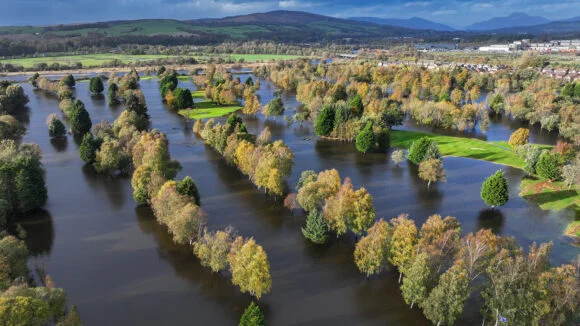
The clearest signal in the UK’s first round of detailed climate risk disclosures is also a warning about their limits: flooding appears across public services, but the available information still doesn’t show how prepared those services are to cope. The National Audit Office (NAO) says extreme weather is affecting areas including railways, prisons and healthcare, with consequences for public finances. Yet gaps in departmental reporting make the overall exposure difficult to assess.
That uncertainty matters because the disclosures are intended to show how risks to infrastructure, service delivery and finances are being managed. This is the first year larger UK departments have been required to publish fuller details of their exposure to global warming. According to the NAO, many departments are still at an early stage of identifying and understanding those risks.
Flooding stands out across the disclosures
Flooding was the most frequently identified hazard in the material the NAO reviewed. The figures point to exposure across both secure facilities and healthcare sites: 89% of prisons face a high risk of flooding, and National Health Service sites recorded 391 flooding incidents in 2024-25.

Those measures describe different parts of the problem. The prison figure indicates the share of facilities facing a high level of risk; the NHS figure counts incidents over a financial year. Neither, on its own, shows the cost of damage, the length of service interruptions or how much protection is in place. The disclosures therefore provide a starting map of exposure, while leaving important questions about operational and financial consequences unanswered.
For services that depend on buildings, transport links and reliable access, a flood can affect more than the location where water enters. Disruption to a railway, hospital or prison can put pressure on other facilities and services, depending on how much spare capacity is available. The source figures don’t quantify those knock-on effects, but they help explain why incident counts and site-level risk need to be read alongside information about continuity plans and repair needs.

Heat creates a separate set of pressures
Floods are not the only hazard facing essential infrastructure. The source describes increasingly severe periods of extreme heat, sometimes followed by flash flooding. This summer, heat damaged roads and railways and left some schools and hospitals dangerously hot.
That combination puts different demands on operators. High temperatures can affect the condition and use of physical assets, while uncomfortable indoor conditions can make it harder to maintain services for patients, pupils and staff. The NAO’s report also links prison overheating with a tendency toward more violence. It does not quantify the scale of that effect, but the finding shows how climate exposure can extend beyond repairs to buildings and equipment.

Heat and flooding also call for different kinds of preparation. A site may need ways to manage indoor temperatures, protect equipment or keep services running during disruption; flood exposure raises questions about water entering facilities and damaging access routes or assets. A useful assessment has to connect those hazards to the services people rely on, rather than simply list the locations at risk.
More disclosure, but limited evidence of readiness
NAO head Gareth Davies said, “Parliament needs clear information on the resilience of infrastructure, service provision and finances to climate change, and on how these risks are being managed.” He added: “We expect this reporting to become more useful over time.”
The distinction between identifying a hazard and demonstrating readiness is central to the findings. A disclosure that names flooding or overheating can help readers understand where exposure exists. It says less about whether departments have set targets, funded practical measures, assigned responsibility or tested how services would operate during disruption.
Geoffrey Clifton-Brown, chair of the UK Parliament’s Committee of Public Accounts, said that “Government still has much to do, particularly in setting meaningful targets.” He described better reporting as encouraging, while arguing that readers need evidence about preparedness as well as a list of risks.
For taxpayers and people who depend on public services, the missing detail makes it harder to judge where resources may be needed and how service interruptions could affect them. For infrastructure operators, clearer and more consistent records could help distinguish known physical exposure from gaps in planning or information. The disclosures can support that assessment only if they become specific enough to connect risks with actions and outcomes.
What the next disclosures need to clarify
The NAO’s review suggests the reporting process is still developing. The next useful step is not simply a longer inventory of hazards, but information that allows comparisons across departments and over time: which sites are exposed, what measures are planned or already in place, and how departments will track whether those measures protect services and finances.
The available figures establish that flooding is a widespread concern and that heat has already disrupted assets and working conditions. They don’t yet settle how large the total costs may be or how consistently services can withstand further events. The quality of future disclosures will determine whether this first map becomes a practical account of resilience.