Economy U82
Flattening Management Can Shift Workloads and Weaken the Leadership Pipeline
Fewer management layers can speed decisions, but companies must reassign leadership work, support remaining managers and develop future leaders.
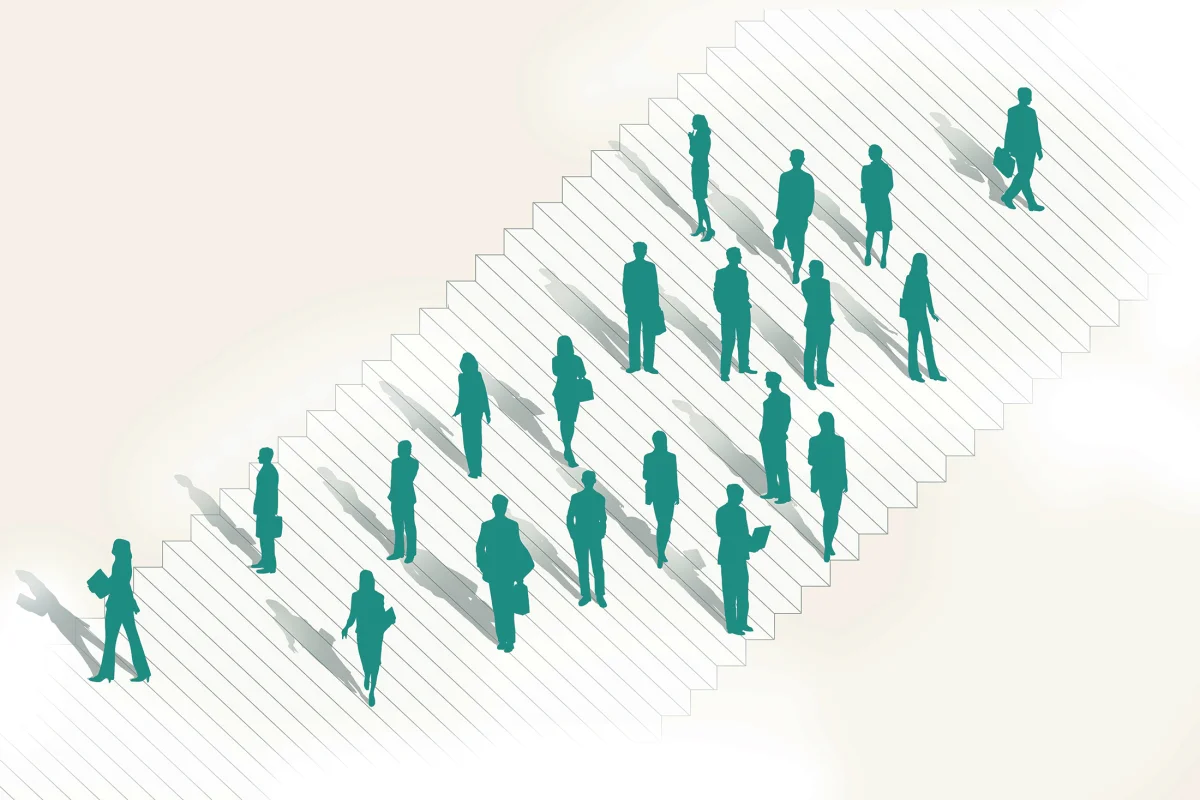
Removing management layers can shorten approval chains and give employees more autonomy. But the org chart doesn’t show who will handle the work those managers performed, or how remaining leaders will absorb it. A flatter structure can improve how decisions move through a company; it can also leave managers with broader responsibilities, heavier workloads and less time to develop their teams.

Before changing the structure, companies need to map both the visible tasks of each layer and its less formal leadership work. Managers coordinate across teams, translate priorities into action, coach employees and help resolve uncertainty. Those responsibilities don’t disappear when a role does. They shift to someone else, or go undone.
More direct reports don’t capture the full workload
Gallup’s 2026 State of the Global Workplace reports that manager engagement worldwide declined by about 29% between 2022 and 2025. The research doesn’t establish that organizational flattening caused the decline. It does raise a practical question for companies changing their structures: will managers have enough time and support to meet their teams’ needs?
That question matters because middle managers connect senior leaders’ strategies with employees responsible for carrying them out. An analysis from Boston University’s Questrom School of Business describes the pressure built into that position: leaders above expect results, while employees need direction and support to deliver them. Fewer layers can put more of that coordinating work on the managers who remain.
Consider a company that moves up a launch date to capture the speed it expects from a flatter structure. The manager responsible still has the same team and existing customer commitments. Without additional capacity or adjusted priorities, the earlier deadline adds pressure rather than removing delay. The manager must either push the team harder or challenge expectations from above.
A similar strain can arise when a capable technical employee is promoted quickly into a broader leadership role. They may be accountable for more work before they’ve had enough practice delegating, resolving conflict or making decisions with incomplete information. Under pressure, it’s natural to return to familiar technical problem solving, even when the new role depends on helping other people solve problems.
AI can intensify the workload in a different way. A team may generate several proposals in the time it once took to prepare one, prompting senior leaders to expect faster decisions. But a manager still needs to check assumptions, weigh risks and decide which proposals merit attention. Faster production can mean more work to assess, without more time for careful judgment.
Give remaining managers room to lead
Flattening doesn’t have to mean keeping every layer. It does require decisions about who owns the responsibilities that remain, what authority that person has and what work should take priority. Managers need a realistic number of direct reports and enough time to help teams learn and improve. If their days are consumed by urgent issues, coaching and coordination can quickly fall away.
That can weaken more than current team performance. Management layers have traditionally given employees opportunities to build judgment and leadership experience before taking on greater responsibility. If companies remove layers while AI handles more entry-level work, emerging leaders may have fewer chances to practice the tasks that prepare them to lead.
Build leadership experience into the work
Leadership development can begin before someone has a management title. Companies can let emerging leaders observe experienced managers as they work through disagreements, explain decisions and handle uncertainty. After a planning discussion, a manager can walk through the tradeoffs behind a choice, giving the observer access to reasoning that might not appear in the meeting notes.
Next, offer bounded opportunities to lead: coordinating a project, coaching a colleague or organizing work across teams. Set clear limits on which decisions the person owns, and make sure an experienced manager is available when questions arise. These assignments let employees practice responsibility while giving the company a chance to see how they handle it.
Judgment also needs practice, especially when AI can quickly produce options. When an employee brings forward a recommendation, ask what they checked, which alternatives they set aside and why. That conversation helps them learn to explain their reasoning and recognize when they need another perspective.
People leadership requires practice with other people. Giving feedback, delegating work and handling a difficult conversation can be harder in a live situation than in a training session. Emerging leaders benefit from repeated chances to take on those moments, followed by guidance on what went well and what they could try differently.
Finally, growth doesn’t need to depend on a sequence of promotions. Assign progressively broader responsibilities and assess how people handle them. That gives employees room to develop and gives the company evidence of who may be ready for more.
Structure changes need a development plan
A smaller management hierarchy may make a company appear more efficient, but efficiency depends on how the work gets done after roles change. Companies need to account for the responsibilities removed with each layer, set workable expectations for those who remain and preserve opportunities for employees to build leadership skills.
Without that planning, fewer managers may end up carrying more work with less time to guide their teams. Burnout and turnover can follow, while the next generation has fewer chances to prepare for leadership. The test of a flatter organization is whether decisions move faster while managers still have the authority, capacity and support to lead well.